Project Outline
In the recent years software engineering and coding jobs have become so popular that even those who are not interested in coding are forced into taking up software engineering jobs to make a decent living. The aim of my project is to find alternate career options that pay wages comparable to a tech or software engineering job but does not require any coding skills. This will help people leverage my analysis to plan out potential career opportunities based on varied interests.
Project Structure
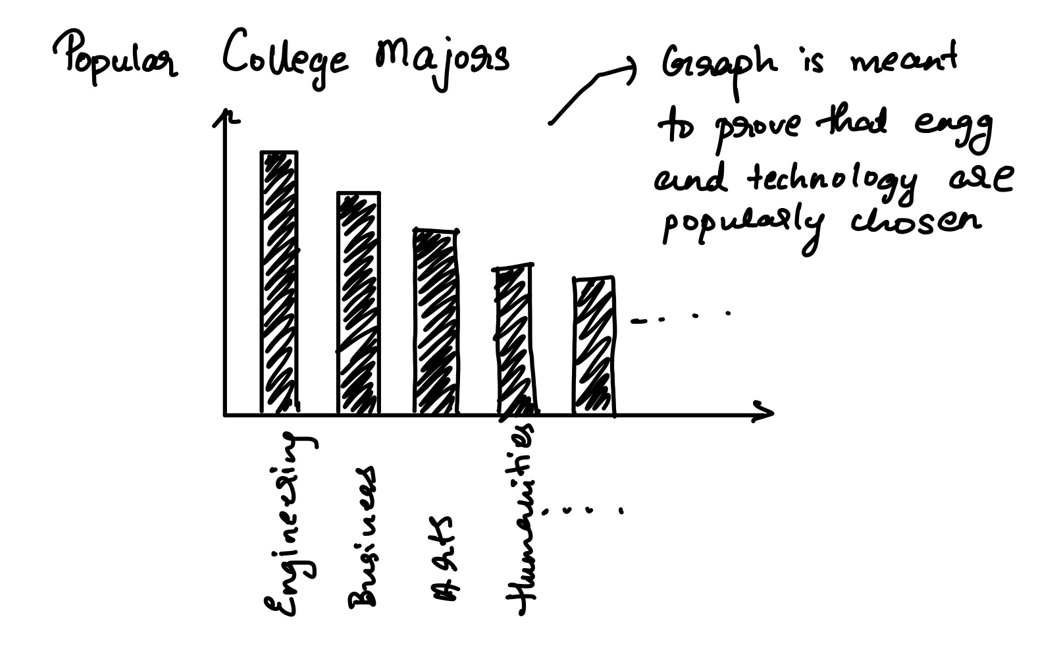
Analyse college majors: I plan to start my story with some data showing the most popular courses to study today. Based on some of the information I saw online, most of the data would be skewed towards engineering and technology.
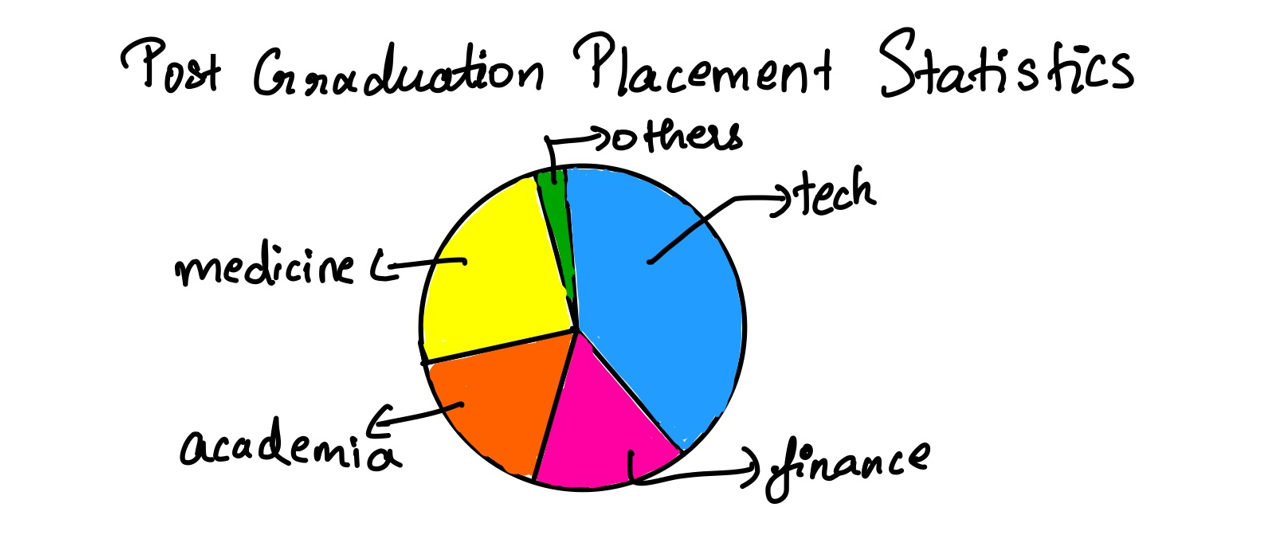
Analyse employment or post college placement statistics: I would then follow this up by looking into some of the employment statistics. I anticipate a lot of people focused on technical jobs. This would further support my claim that students are in a way forced to take up technology and sciences since they are conditioned to believe that these are the jobs that pay the highest.
I would follow this by a short article on why more people are moving toward tech followed by a question. “If tech degrees are the key to success are all millionaires/CEOs coding geniuses?”. I plan on giving examples of Melody McCloskey, Micheal Dell and a few more and how they are non tech founders of successful companies
Non technical roles in technical companies: While founding a new company altogether is definitely a great way to get richer, not everyone has a entrepreneurial goal or mindset. Look into high paying management or non tech roles at top companies. Focus not just on roles like product management or business but also creative roles like UX designers etc. Find and show statistics to get average salaries in the field. Also show degrees that they potentially look for.
Comparison of salaries: Look into salaries of non technical roles. Create a data visualization for the same and compare these with tech salaries to prove the point that you don’t need to be software engineer to make money.
Conclude by telling people that they do not need to fall into the traditional path of tech and can tweak their interests into high paying jobs as well thus encouraging people to follow their passion. I could also end by giving people an option to view viable careers based on their areas of interest
Sketches
I first want to focus on the popular majors across colleges. The best way to represent this would be a bar graph since it can clearly show distinction across majors. I would expect the bar depicting engineering and technology to be very high
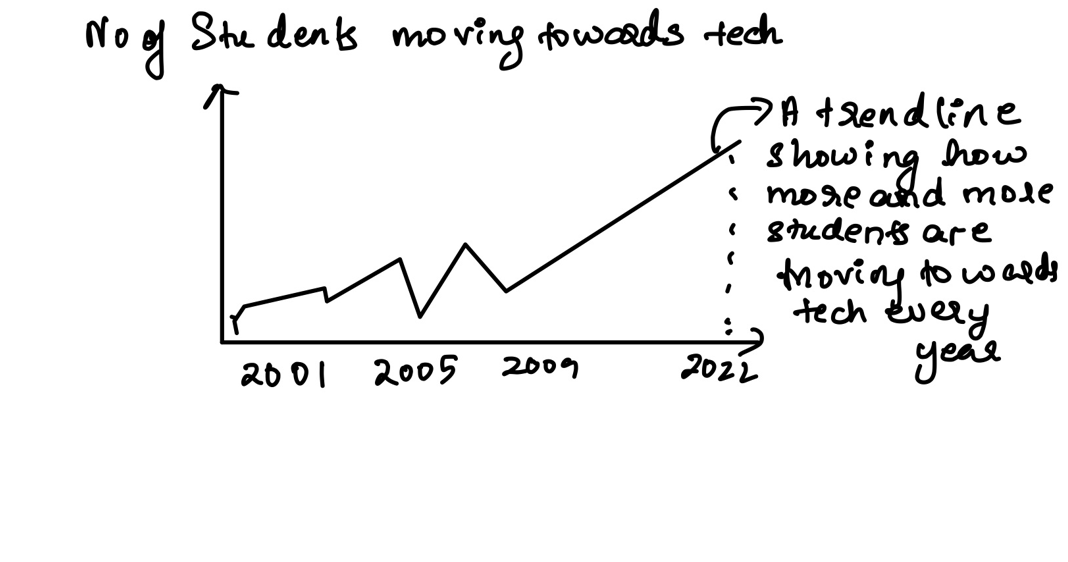
The next step would be showing how more and more students are moving towards tech degrees and a trend line chart is a great way of representing yearly trends
I would also be showing post gradution results in the form of a pie to prove that most students get technical jobs post graduation.
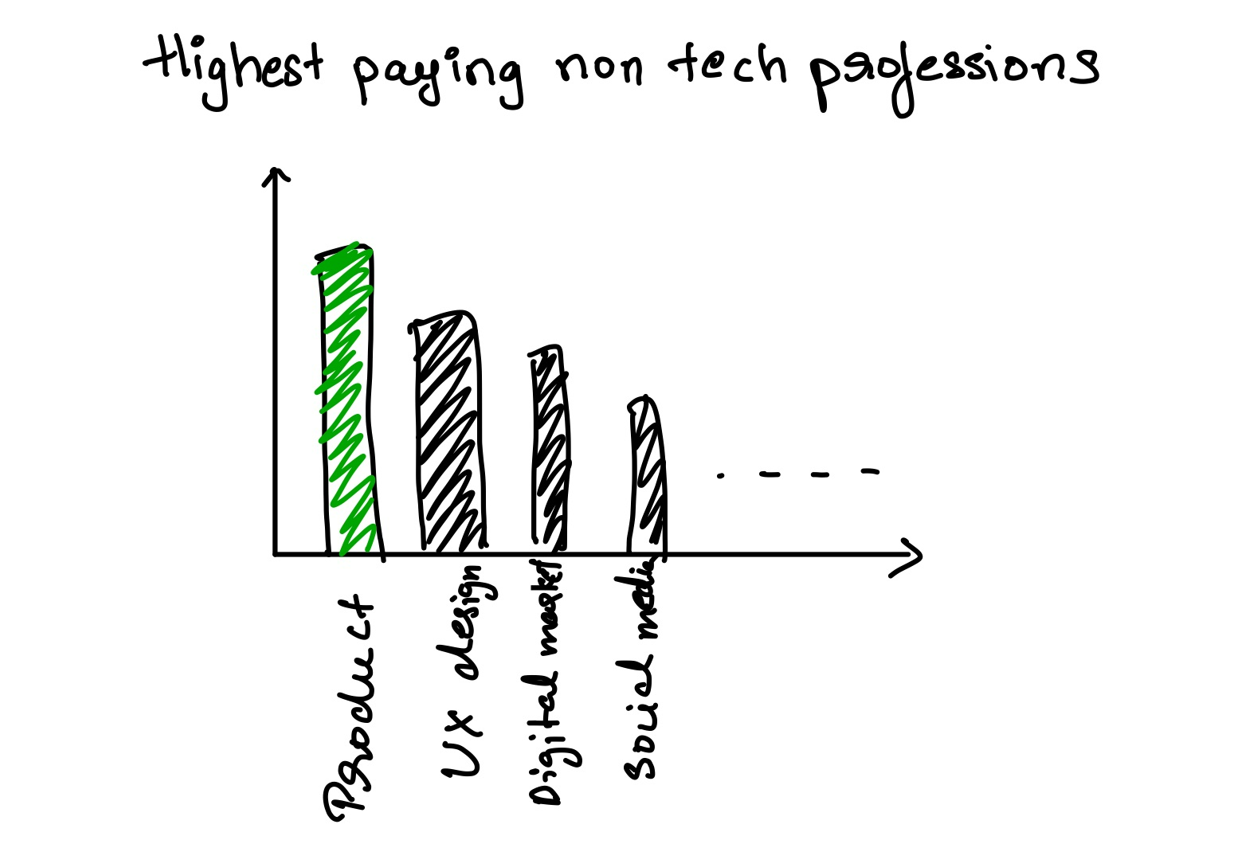
After establishing the premise about CEOs and founders with non technical backgrounds and proving that non technical degrees yield viable careers too, a bor chart showing salaries would be a great way to compare non technical professions
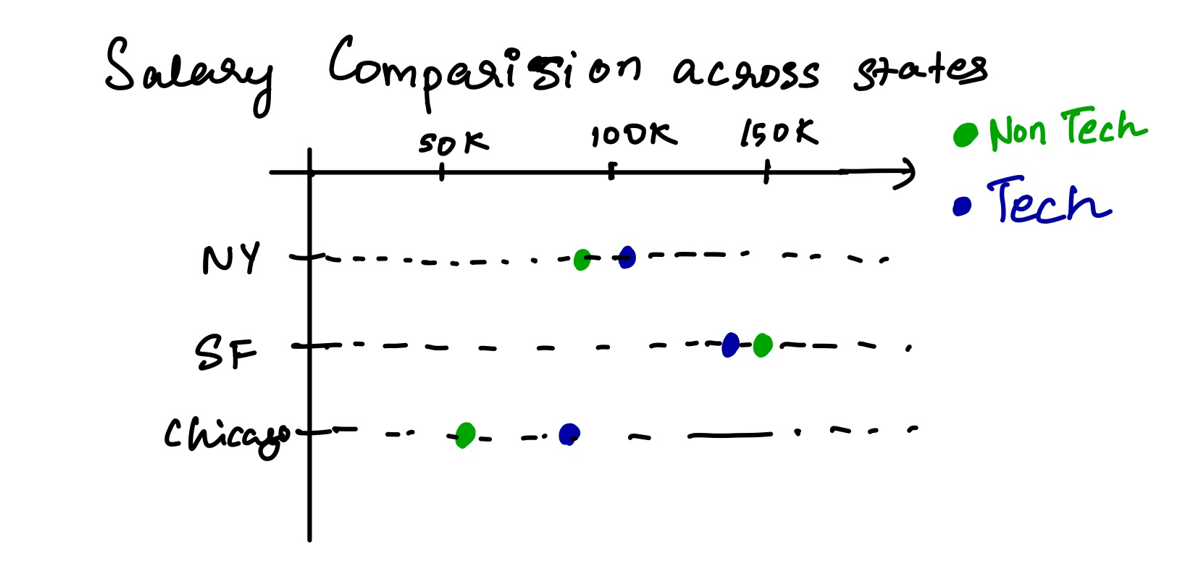
I also plan on having a salary comparision chart across states to show that tech as well as non tech salaries are comparable. Also this graph can give us an interesting insight about which states have a better career in non technical or creative fields
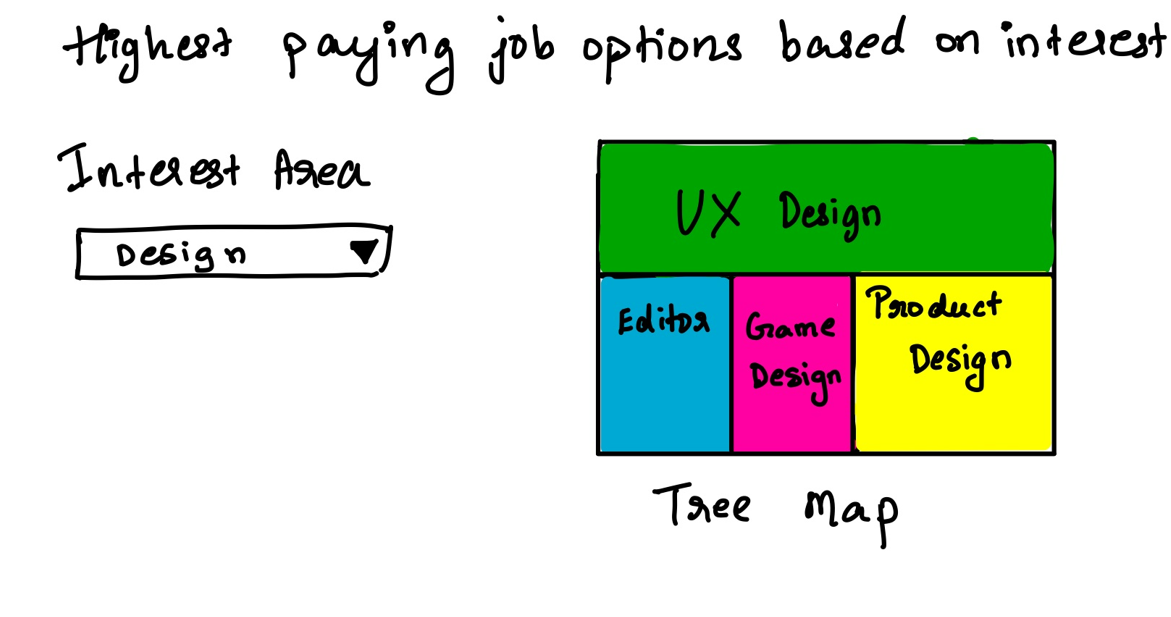
Finally, I want people to have the ability to view viable careers based on their interest. A dropdown can have several interests. And a tree map can show the potential careers complementing thei area of interest
Data and Data Sources
| Data Name (Linked to source) | Purpose |
|---|---|
| Overall Salary survey-Source 1 | To get salaries across all industries. This information would help show if technical salaries are actually higher. I would also be using this data to identify high paying non technical jobs in big organizations |
| Overall Salary survey- Source 2 | To get salaries across all industries. This information would help show if technical salaries are actually higher. I would also be using this data to identify high paying non technical jobs in big organizations |
| Student Placement Data Source 2 | Summary of placement statistics and roles taken up post graduation. This information will help guide my story to show if more students are actually geared towards technical roles irrespective of their majors |
| Student Placement Data Source 2 | To get student placement data across all industries. Multiple sources can help offer more reliable information. This information will help guide my story to show if more students are actually geared towards technical roles irrespective of their majors |
| College Majors Statistics- Source 1 | Get college major statistics from five thirty eight to understand and identify popular college courses. This source would be used to understand and confirm if students are actually moving towards more technical majors or if software for example is the most popular major selection |
| College Majors Statistics- Source 2 | Get college major statistics from National Survey of College Graduates to understand and identify popular college course. This source would be used to understand and confirm if students are actually moving towards more technical majors or if software for example is the most popular major selections |
| Non Technical Founder Information- Source 1 | Get more insight into non technical CEOs of successful companies. I fould some quotes and backgrounds about many successful founders here who do not come from a technical background and wish to incorporate it to increase the moticational aspect of my project |
| Non Technical Founder Information- Source 2 | Get more insight into non technical CEOs of successful companies. I fould some quotes and backgrounds about many successful founders here who do not come from a technical background and wish to incorporate it to increase the moticational aspect of my project |
Methods and Mediums
I really enjoyed exploring the features of shorthand and would be using that as the primary tool to host and display my story. Since I would also need to display a lot of charts, I plan on using flourish and Tableau to create the required charts that would depict my story better.
I really liked the idea of enlarging the main insight numbers so I plan to incorporate that to show data like “Percentage of people pursuing technical degrees etc”. I also plan on including quotations from famous CEOs who have creative degrees since that would create a better impact for my story. Finally, I would also want to explore more comparison techniques to prove that non tech jobs are just as attractive as tech jobs.
In class critique
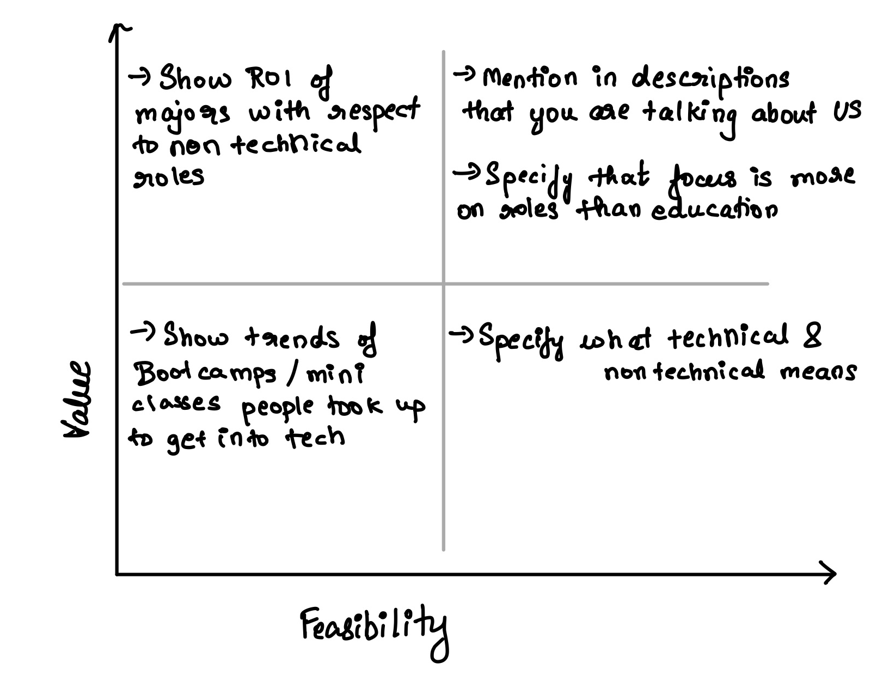
The critique in class gave me a stronger insight on my sketches. My peers mentioned that I could focus on one country instead of doing a more global approach and I plan on focussing on United States to give more focusses recommendation. They were also initially curious If my aim is to gear people towards non technical careers or majors and this is something I am still thinking about. But I currently am leaning towards non technical careers over majors since I do not want to impose the thought that you need some kind of a degree to be successful. In one of my visualizations I mentioned a comparision between tech and non tech and one of my peers suggested I give more details on what I mean by tech and non tech. This is something I plan on exploring further. Finally they recommended focusing on tech job data in my college placement data and graying out everything else. While I do think that may have value I want to hold out on that since I want to see if I can derive any insights from what I find here too